
Why Commitment to the Process Matters More Than Certainty About the Outcome
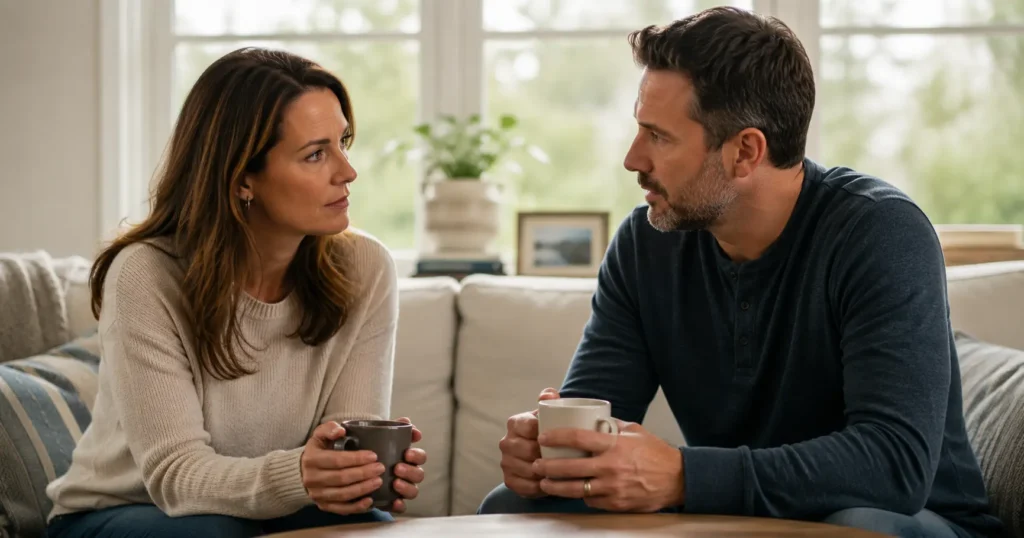
Reader Question
“I am really struggling with healing my marriage after an affair. We seem to be up and down. I love him so much, and a part of me wants our marriage more than anything and wants to keep our family together.
But then I think about the affair, the other woman, all the lies and the depth of his betrayal, and I get angry. I yell and scream at him. I throw things and call him every mean thing I can think of. I tell him to leave and that I want a divorce.
Sometimes my husband is willing to discuss his affair with me. Other times he shuts down, gets mad, and is unwilling to be nice to me.
Is there any hope for us?”
Quick Answer
Yes. There is absolutely hope.
The question is not whether your marriage can heal. The more important question is whether both of you are willing to commit to the healing process.
One of the most important keys to healing a marriage after infidelity is learning to commit to the recovery journey before you have certainty about the outcome.
That may sound impossible, especially in the early days after disclosure. But it is often the difference between couples who heal and couples who never get far enough down the road to discover what healing could have looked like.
Healing a Marriage After an Affair Is Not for Wimps
I don’t say that to be harsh.
I say it because it’s true.
Healing after infidelity is one of the most difficult journeys a husband and wife can undertake together.
Even if you aren’t strong when you begin, if you stay committed and take it one day at a time, you will become stronger along the way.
Most couples begin this journey in complete emotional chaos.
The betrayed spouse often feels:
- devastated
- angry
- confused
- ambivalent about the marriage
- uncertain whether trust can ever be rebuilt
The unfaithful spouse may be struggling with:
- shame
- guilt
- defensiveness
- hopelessness
- fear they can never be forgiven
- lingering attachment to the affair partner
It is messy.
Very messy.
Which is exactly why commitment becomes so important.
The Olympic Diver
Imagine an Olympic diver standing on a ten-meter platform.
The crowd watches in silence.
He is about to perform a difficult dive involving twists, turns, and backward somersaults before entering the water cleanly and smoothly.
Now imagine his internal dialogue:
“I’m not sure I can do this.”
“I’ll give it a try, but if it doesn’t feel right halfway through, I’ll just stop.”
“If I get nervous, I’ll quit.”
What are his chances of winning a gold medal?
Zero.
The athlete who wins is completely committed to the process before ever stepping off the platform.
He doesn’t know exactly how every moment of the dive will feel.
He doesn’t know whether he’ll experience fear.
He doesn’t know whether he’ll perform perfectly.
But he is fully committed to giving himself to the process.
Healing a marriage after infidelity requires the same mindset.
Why Feelings Make a Terrible Leader
One of the biggest mistakes couples make after an affair is allowing their feelings to determine whether they continue the recovery process.
Feelings matter.
But feelings change by the hour.
One day you feel hopeful.
The next day you feel hopeless.
One day your spouse says something encouraging.
The next day they say something insensitive and you want to quit.
Healing is often described as:
Four steps forward. Two steps back.
There will be days when you feel:
- discouraged
- exhausted
- angry
- hopeless
- tempted to give up
There will be days when you question everything.
That does not mean healing is not happening.
It means you’re human.
Commit to the Process, Not the Outcome
This is one of the most important concepts we teach.
Many betrayed spouses believe they must decide immediately:
“Am I staying or leaving?”
In reality, that decision is often impossible to make in the early stages of recovery.
The trauma is too fresh.
The emotions are too intense.
The information is incomplete.
Instead of demanding certainty about the marriage, what if you committed to the process?
What if you said:
“For a period of time, I will fully engage in healing and discover what is possible.”
That is a very different commitment.
What Should You Actually Commit To?
When we work with couples, we often ask them to commit to a specific period of focused recovery work.
During that time:
- Both spouses participate fully.
- Both complete assignments and exercises.
- Both show up for coaching or support.
- Both work on themselves instead of trying to fix each other.
- The word “divorce” is taken off the table for the agreed period.
- Threats, ultimatums, and emotional quitting are set aside.
The betrayed spouse works to create safety for truth.
The unfaithful spouse commits to telling the truth.
Both commit to the process.
This doesn’t guarantee success.
But it creates the conditions where healing becomes possible.
Why Most Couples Get Stuck
Many couples become trapped in a cycle of:
“If only my spouse would change.”
The betrayed spouse thinks:
“If only they would understand my pain.”
The unfaithful spouse thinks:
“If only they would stop bringing it up.”
Meanwhile, both people are focused on changing the other person.
Healing begins when we focus on the one person we can actually change:
Ourselves.
In our experience, when one spouse begins making healthy changes consistently, the other spouse often begins responding differently as well.
Not always.
But surprisingly often.
My Own Journey
When my husband disclosed his affair, I was not ready to commit to my marriage.
Not even close.
I could not imagine promising forever when I wasn’t even sure I could survive the next week.
So I made a different commitment.
I committed to three months.
I promised myself that if we had not made meaningful progress after three months, I would give myself permission to reevaluate.
Three months later, I was still hurting deeply.
But there was a tiny bit of hope.
So I committed to another three months.
Then another.
And another.
I continued this way until I reached the two-year mark.
At that point, Brian had done everything I could think of that any husband could reasonably do to repair the damage he had caused.
Only then did I make a full commitment to our marriage.
Not before.
For me, commitment to the process came first.
Commitment to the marriage came later.
That distinction made all the difference.
The Rewards Are Worth It
Today, helping others recover from infidelity has become our life’s work.
Ironically, we almost never discuss Brian’s affair anymore.
Not because it didn’t happen.
Not because it wasn’t devastating.
But because it no longer defines our marriage.
Back then, recovery felt impossible.
The mountain seemed too high.
The pain felt too deep.
Now, looking back, the recovery process feels relatively short compared to the many years of healing, love, friendship, and fulfillment that followed.
The rewards have been worth every difficult step.
Final Thoughts
If your marriage is struggling after infidelity, do not make the mistake of believing that certainty must come before commitment.
Often it works the other way around.
The couples who heal are not necessarily the couples who start with the most hope.
They are the couples who remain committed to the process long enough to discover what healing is capable of producing.
If we can do it, so can you.
Be committed to doing what it takes to create the future you truly want.
Learn More
6 Stages of Affair Recovery and Healing After Infidelity
Related Articles
Your Future is Bigger than Your Affair Story
Recovering From an Affair: 9 Keys to Healing After Infidelity (Personal Growth)
Betrayal Trauma After Infidelity: Symptoms & Healing
Ready for More Personalized Help?
If you’re looking for more than information and want experienced, personal guidance, our three-day Healing from Affairs retreat has helped thousands of couples rebuild trust, restore hope, and heal after infidelity.