
One of the most painful questions an unfaithful spouse can ask is:
“How do I forgive myself for having an affair?”
I’ve worked with many men and women who have genuinely ended their affairs, taken responsibility for their actions, and committed themselves to repairing the damage they caused. Yet years later they continue to struggle with guilt, shame, and self-hatred.
They tell me:
“I don’t know if I deserve forgiveness.”
“I can’t believe I did this.”
“I hate what I’ve done to my spouse, my family, and myself.”
“How can I ever forgive myself?”
If that’s where you find yourself today, I hope this article will encourage you.
Why Self-Forgiveness Feels So Difficult
Affairs often violate a person’s deepest values.
Many people who have affairs never imagined they would become unfaithful. They may have judged others who cheated. They may have sincerely believed they would never cross that line.
Then they did.
The result is often intense guilt, regret, embarrassment, and shame.
In some ways, the pain can be even greater because they know they were not simply victims of what happened. They participated in creating it.
This can lead to a dangerous conclusion:
“I did something terrible, therefore I must be a terrible person.”
But those are not the same thing.
The Difference Between Guilt, Shame, and Remorse
Understanding the difference between guilt, shame, and remorse is important.
Guilt says:
“I did something wrong.”
Healthy guilt can be helpful. It alerts us when our behavior is out of alignment with our values and motivates us to make things right.
Shame says:
“There is something wrong with me.”
Shame attacks our identity rather than our behavior. Instead of motivating change, shame often keeps us stuck in self-hatred, discouragement, and hopelessness.
Remorse goes a step further.
Remorse acknowledges the pain we caused, takes responsibility for it, and motivates us to become a healthier person.
Healthy remorse can be a powerful force for growth.
Shame rarely is.
“I Did Something Bad” Is Different Than “I Am Bad”
This may be the most important thing I can say.
You may have made choices that hurt your spouse.
You may have damaged your marriage.
You may have disappointed yourself and others.
You may deeply regret what happened.
But none of those things automatically make you a bad person.
Human beings are complicated.
Good people sometimes make terrible decisions.
The goal is not to deny responsibility.
The goal is to separate your behavior from your identity.
If you convince yourself that you are fundamentally broken, you may stop believing change is possible.
And if you stop believing change is possible, growth becomes much harder.
Why Self-Punishment Doesn’t Heal Anyone
Many unfaithful spouses believe they should continue punishing themselves.
They think:
“If I stop feeling guilty, it means I don’t care.”
“If I forgive myself, I’m letting myself off the hook.”
“I deserve to suffer.”
But ongoing self-punishment doesn’t heal your spouse.
It doesn’t repair the marriage.
It doesn’t make the affair unhappen.
And it doesn’t help you become a healthier person.
In fact, excessive shame often keeps people trapped in the very patterns that contributed to their poor decisions in the first place.
Self-hatred is not the same thing as accountability.
What Real Accountability Looks Like
Real accountability is not endless self-condemnation.
Real accountability looks like:
Telling the truth.
Taking responsibility.
Answering difficult questions.
Making amends where possible.
Changing unhealthy behaviors.
Developing stronger boundaries.
Learning from your mistakes.
Becoming the person you wish you had been before the affair.
That’s accountability.
That’s growth.
And that’s where healing begins.
Self-Forgiveness Is Not Immediate
Many people worry that forgiving themselves means minimizing what happened.
It doesn’t.
Self-forgiveness is not pretending the affair didn’t matter.
It is not excusing your choices.
It is not avoiding consequences.
And it certainly is not demanding forgiveness from your spouse.
Self-forgiveness is a process.
It often comes after you’ve taken responsibility, done the hard work of recovery, and demonstrated through your actions that you are committed to change.
Over time, many people reach a place where they can honestly say:
“I regret what I did.”
“I wish I had made different choices.”
“I understand the pain I caused.”
“But I am no longer defined by the worst thing I’ve ever done.”
That is a healthy place to arrive.
Put On Your Own Oxygen Mask
When you fly on an airplane, flight attendants remind passengers to put on their own oxygen mask before helping someone else.
The reason is simple.
You cannot effectively help others if you are unable to function yourself.
The same principle applies here.
If you are drowning in shame, self-hatred, and hopelessness, you will struggle to show up as the spouse, parent, friend, or person you want to be.
Healing yourself does not take away from your spouse’s healing.
In many cases, it helps support it.
The healthier you become, the more capable you are of rebuilding trust and creating a better future.
Frequently Asked Questions
How do you forgive yourself for having an affair?
Self-forgiveness begins by accepting responsibility for your choices, making amends where possible, changing unhealthy behaviors, and allowing yourself to learn from the experience rather than being permanently defined by it.
Can I ever forgive myself for cheating?
Yes. Many people eventually reach a place of genuine self-forgiveness. This does not mean forgetting what happened or minimizing the harm. It means accepting responsibility while recognizing that one mistake does not define your entire life.
What’s the difference between guilt and shame after an affair?
Guilt says, “I did something wrong.” Shame says, “There is something wrong with me.” Healthy guilt can motivate growth. Shame often keeps people trapped in self-hatred.
Does self-forgiveness mean I’m excusing my behavior?
No. Self-forgiveness means taking responsibility, learning from your mistakes, and allowing yourself to move forward. It is not the same as excusing what happened.
How long should I feel guilty after having an affair?
There is no set timeline. Healthy remorse is appropriate. However, years of self-punishment rarely help anyone heal. The goal is growth, accountability, and change.
Can I become a good person again after cheating?
Yes. Having an affair was a behavior and a choice, not your permanent identity. Many people go on to rebuild integrity, develop healthier character, and create stronger relationships.
Final Thoughts
If you are struggling to forgive yourself, remember this:
You are responsible for your choices.
You are responsible for the pain you caused.
You are responsible for learning from what happened and becoming a healthier person.
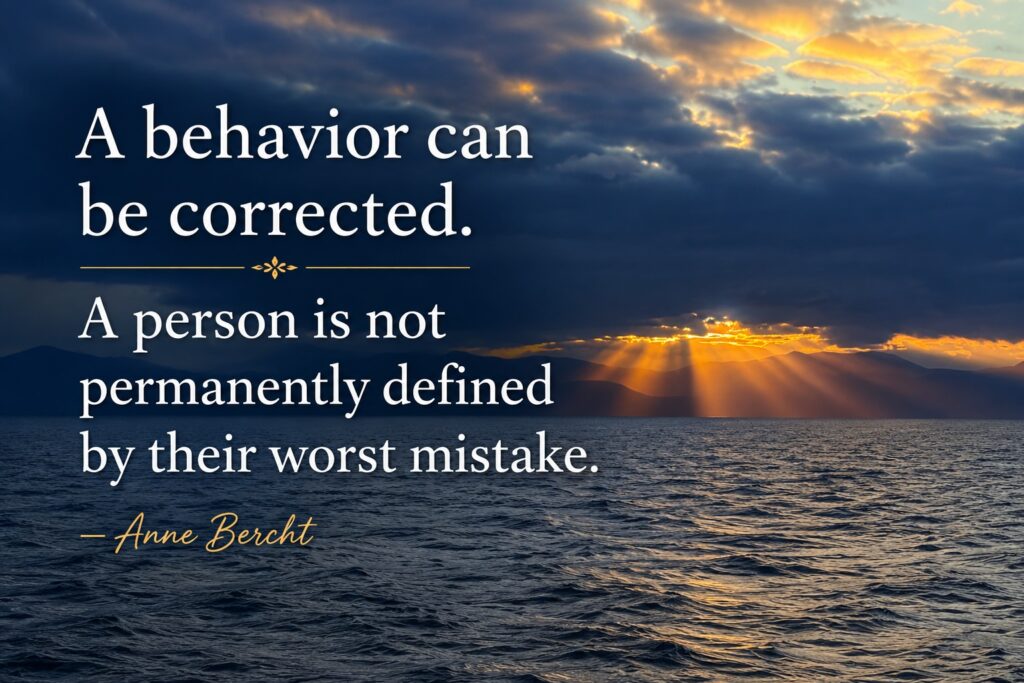
But you are not permanently defined by your worst mistake.
A behavior can be corrected.
A person can grow.
A person can change.
A person can learn.
And a person can heal.
The affair may become part of your story.
It does not have to become your identity.
Understanding Forgiveness After Infidelity
For a deeper understanding of what forgiveness is—and what it is not—read:
→ What Is Forgiveness? Understanding Forgiveness After Infidelity
Related Articles
Why Self-Forgiveness Matters in Affair Recovery
Trust After Cheating: How to Rebuild Trust After Your Affair
Next Step in Recovery
Many people discover that forgiveness becomes easier as healing progresses: